Why
choosing the right Weed Mat matters
Unwanted weeds compete with plants for
sunlight, water, nutrients, and growing space. In a home garden, they can make
beds look untidy and increase maintenance. In agricultural fields, uncontrolled
weed growth may interfere with crop management and add to the time spent on
manual weeding. A suitable Weed Mat can help manage this problem by covering
the soil and limiting the light that reaches many weed seeds and young weeds.
However, not every ground-covering
fabric is suitable for every location. The right choice depends on the plants
being grown, the soil, the weather, the area to be covered, and how the space
will be maintained. Before purchasing, understand the available material,
fabric construction, dimensions, installation method, and practical
requirements of your site.
This guide explains the points
gardeners, farmers, landscapers, and nursery operators should consider when
selecting a Weed Mat for gardens and agricultural fields.
1. Understand how a Weed Mat works
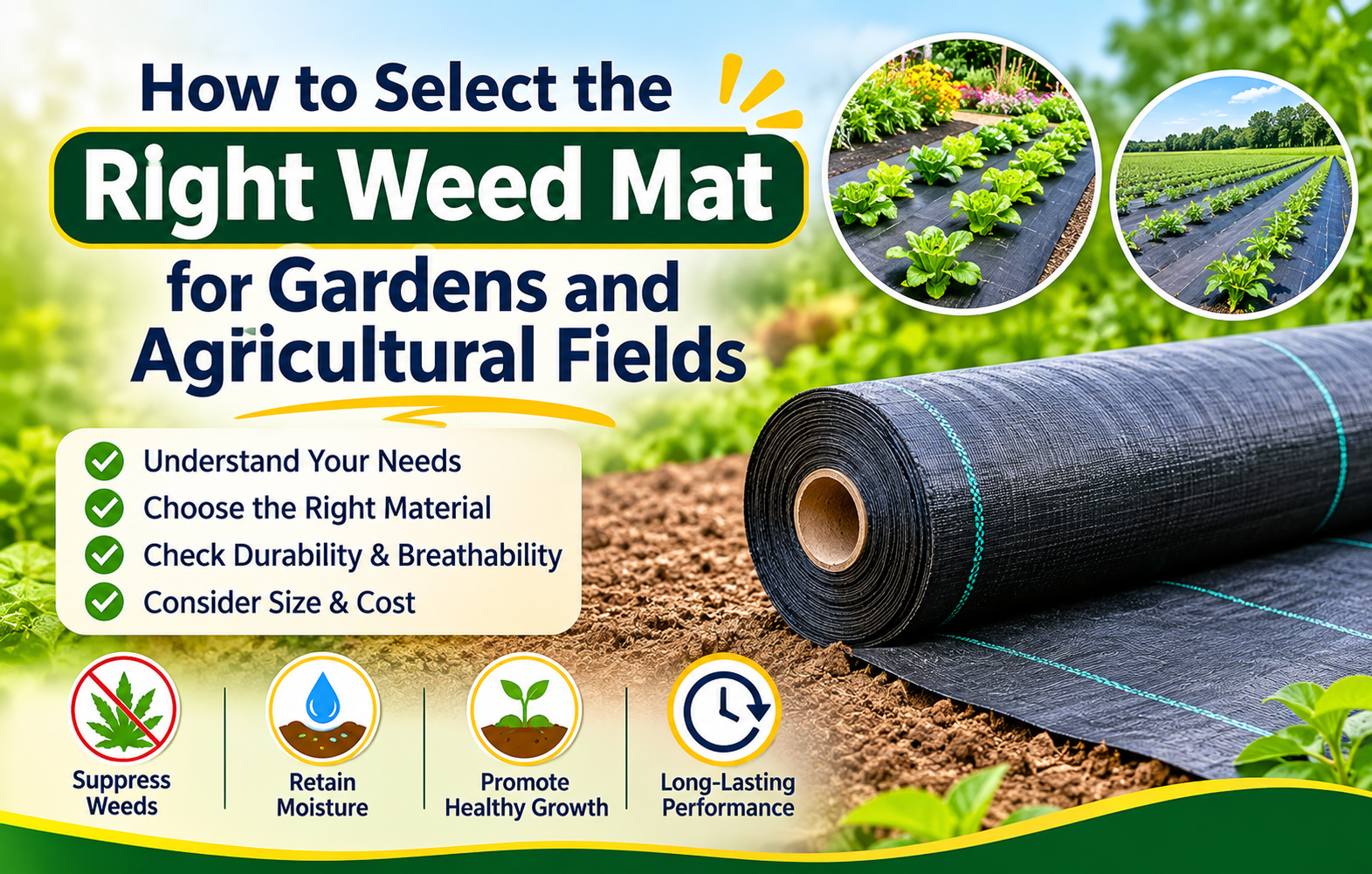
A Weed Mat is a ground-covering
material placed over prepared soil to reduce weed growth. Many woven or
non-woven products are designed to block or reduce sunlight reaching weeds
while allowing water to pass through, depending on their construction. This can
help reduce the need for repeated manual removal in covered areas.
It does not replace good garden or
farm management. Some persistent weeds may grow through openings, seams, or
damaged sections. Soil and wind can also carry seeds onto the top surface,
where weeds may establish if they are not removed. Regular inspection remains
important.
2. Choose the right Weed Mat material for your application
Ground-cover products can differ in
material and construction. Some are woven, while others are non-woven. Their
strength, flexibility, water movement, and handling characteristics may vary by
product.
A woven Weed Mat is commonly
considered for areas where a firm, structured ground cover is useful. It may be
suitable for garden beds, nursery areas, or agricultural rows, depending on its
specifications. Check the product information for details such as fabric
weight, weave, and recommended use rather than judging quality by appearance
alone.
Non-woven ground covers have a
different structure and may be selected for particular landscaping or
separation applications. They are not automatically interchangeable with woven
products. Ask the supplier which uses the material is designed for and whether
it is appropriate for your soil and planting plan.
3. Check Weed Mat fabric weight and strength
Fabric weight is one factor that can
help you compare products, but it should not be the only measure of quality. A
heavier fabric may be more substantial, while the best option still depends on
the intended application and the product's construction.
When comparing a Weed Mat, ask for the
available weight or thickness information and the manufacturer's guidance on
suitable applications. Also ask how the edges behave when cut, whether the
fabric can fray, and what care is recommended during installation. If the area
will experience regular movement, choose a product specified for that level of
use.
4. Consider Weed Mat water and air movement
Water management is essential in both
gardens and agricultural fields. A ground cover should suit the irrigation
method and the water needs of the plants below it. Some products allow water to
pass through the fabric, but the rate can differ. Confirm this property with
the supplier instead of assuming that all covers behave alike.
Air movement and soil conditions also
deserve attention. Avoid choosing a cover without considering drainage,
rainfall, and the possibility of water collecting on the surface. A Weed Mat
should be selected as part of an overall soil and irrigation plan, not as a
substitute for it.
5. Select the right Weed Mat size and coverage
Measure the area before ordering. For
a rectangular bed, record its length and width. For irregular spaces, divide
the area into smaller sections and measure each one. Include enough material
for the layout, overlaps, and secure edges.
When planning a Weed Mat for
agricultural rows, calculate the required length for each row and account for
the space around plants. For a garden, mark the locations of shrubs, trees, and
existing plants so that openings can be cut accurately. Ask the supplier about
available roll widths and lengths before finalising the quantity.
6. Match your Weed Mat to plants and growing layout
Different plants need different
spacing, irrigation, and access. Vegetable beds may require frequent harvesting
and maintenance. Fruit trees and orchard rows may have wider spaces around
trunks. Ornamental gardens may include curves, mixed planting, and decorative
materials.
For trees and shrubs, leave suitable
room around the stem or trunk. Do not cover plant stems tightly or create a
layout that traps unwanted moisture against them. A Weed Mat should support the
planting arrangement while allowing routine watering, inspection, pruning, and
other care.
7. Consider Weed Mat sunlight and outdoor exposure
A cover used outdoors may be exposed
to strong sunlight, rain, wind, and changing temperatures. The product's
suitability for outdoor exposure should therefore be checked before purchase.
Ask whether the manufacturer provides information about UV stabilisation or
other exposure-related properties, and follow the stated recommendations.
Do not assume that a dark colour or
thick appearance proves that a product is suitable for long-term outdoor use.
Product construction and the manufacturer's specifications are more useful when
comparing options. If the cover will be used in a highly exposed location,
explain those conditions to the supplier.
8. Plan Weed Mat installation before buying
Correct installation helps the
material sit flat and reduces gaps where weeds can emerge. First remove
existing weeds, stones, and sharp debris from the area. Level the soil as
needed and prepare the planting beds. Install irrigation lines before covering
the ground if they need to sit underneath the fabric.
Unroll the material over the prepared
surface and position it without unnecessary stretching. Where two pieces meet,
provide an overlap suitable for the product and site conditions. Secure the
edges with appropriate pins, pegs, or another method recommended by the
supplier. The edges should remain in place during wind and routine maintenance.
For planting, mark each location and
make neat openings. Avoid cutting large slits that can spread open. After
installation, inspect joins and edges, and correct loose sections. Ask the
supplier for installation guidance specific to the Weed Mat you purchase, as
fixing methods can differ.
9. Compare Weed Mat cost, quantity, and supplier information
Price matters, especially when
covering a large field, but the lowest price may not represent the best overall
value. Compare products with similar dimensions, material type, weight, and
stated application. Check whether the quoted price is per roll, per square
metre, or another unit so that estimates are comparable.
Before placing an order, ask the
supplier for clear product details: material, dimensions, weight or thickness
where available, water permeability information, intended use, care
instructions, and any stated outdoor-exposure guidance. Ask the supplier to
explain the product's intended use clearly.
10. Maintain the area under your Weed Mat
After installation, inspect the
covered area regularly. Remove weeds that appear at seams, planting openings,
or on top of the material before they spread. Clear fallen leaves, soil
deposits, and other debris where they collect, especially in garden beds and
landscaped spaces.
If you need to move or reuse the
material, clean it and store it in the manner recommended by the manufacturer.
Keeping it dry and protected from unnecessary damage may make handling easier
when it is used again, although reuse depends on its condition and product
guidance.
Common mistakes to avoid when choosing a Weed Mat
One common mistake is selecting a
product based only on price. A second is overlooking water movement and then
discovering that the cover does not suit the irrigation arrangement. Other
mistakes include ordering without measuring, leaving large planting openings,
failing to secure edges, and assuming that every fabric is designed for the
same application.
It is also unwise to expect a ground
cover to eliminate every weed permanently. Seeds can settle on top, and
persistent growth may occur at gaps or damaged areas. A Weed Mat works best
when combined with site preparation, suitable irrigation, careful installation,
and regular inspection.
Conclusion: Make a practical choice for your site
Choosing the right ground cover begins
with understanding where and how it will be used. Consider the material,
construction, fabric weight, water movement, dimensions, plant layout, outdoor
exposure, installation requirements, and maintenance routine. Compare the
manufacturer's product information and ask questions if any specification is
unclear.
For a home garden, nursery,
landscaping project, or agricultural field, the right Weed Mat should match the
site's real requirements rather than a general assumption about all ground
covers. Measure carefully, plan the layout, and select a product with clear
specifications from a supplier who can explain its intended applications. With
thoughtful selection and regular care, you can make weed management more
organized and support a cleaner, easier-to-maintain growing area.